The Legend of Sage Durvasa’s Curse
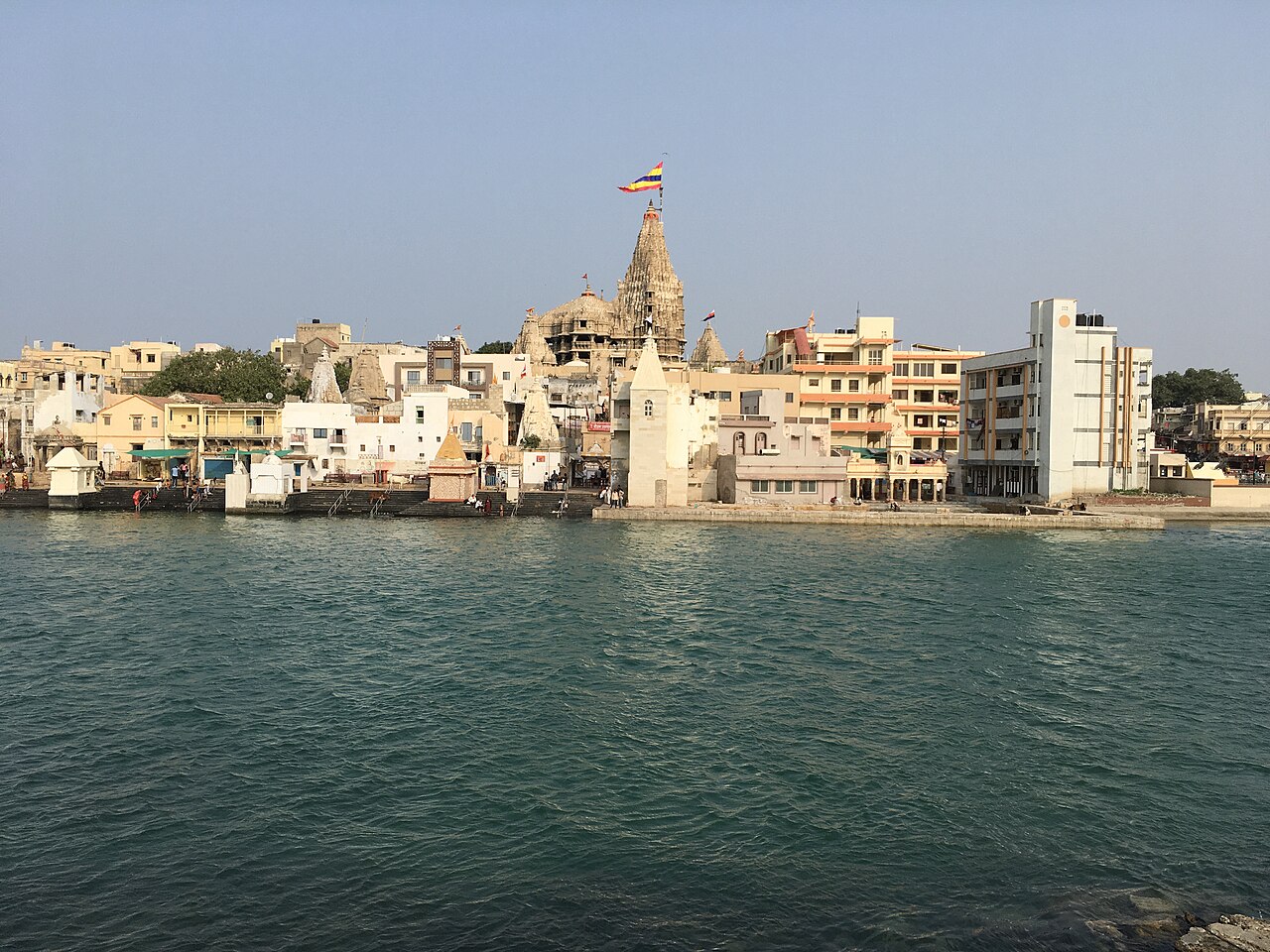
Every visitor to Dwarka asks why the temple of Lord Krishna's chief queen, Maharani Rukmini, stands in isolation two kilometers away from the main Dwarkadhish temple complex instead of standing by his side.
The ancient Skanda Purana explains this through the legend of the fiery-tempered sage Durvasa. When Lord Krishna and Rukmini invited the sage to their palace for dinner, Durvasa accepted on one strict condition: no horses or bullocks would pull his royal carriage; instead, Krishna and Rukmini had to pull the chariot themselves.
The Unquenched Thirst & The Curse
Halfway along the dusty road, Queen Rukmini became severely exhausted and overcome with thirst. Noticing her distress, Lord Krishna tapped the dry ground with his toe, miraculously summoning the celestial waters of the holy Ganga to well up. Overjoyed, Rukmini quenched her thirst, but inadvertently forgot to offer the water to their guest, Sage Durvasa, first.
Furious at this unintended slight, Sage Durvasa cursed Queen Rukmini: "You shall live separated from your beloved husband!" He further cursed the entire region of Dwarka so that its groundwaters would turn brackish and saline, leaving the soil devoid of sweet water.
Fulfilling the sage's curse, Rukmini chose this serene spot outside the city to perform continuous penance (*Tapasya*), and it is here that her temple stands today.
12th-Century Solanki Architectural Mastery
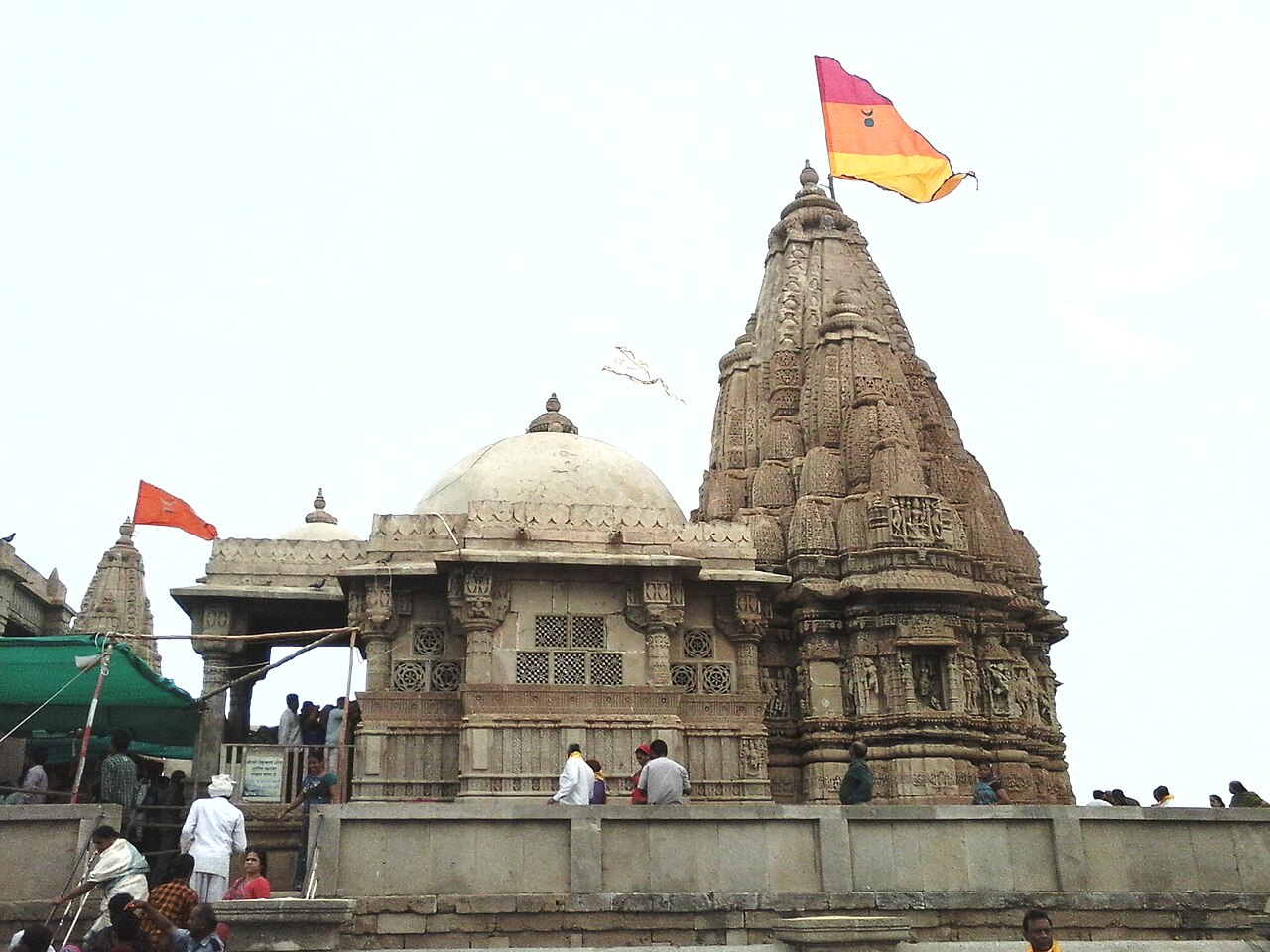
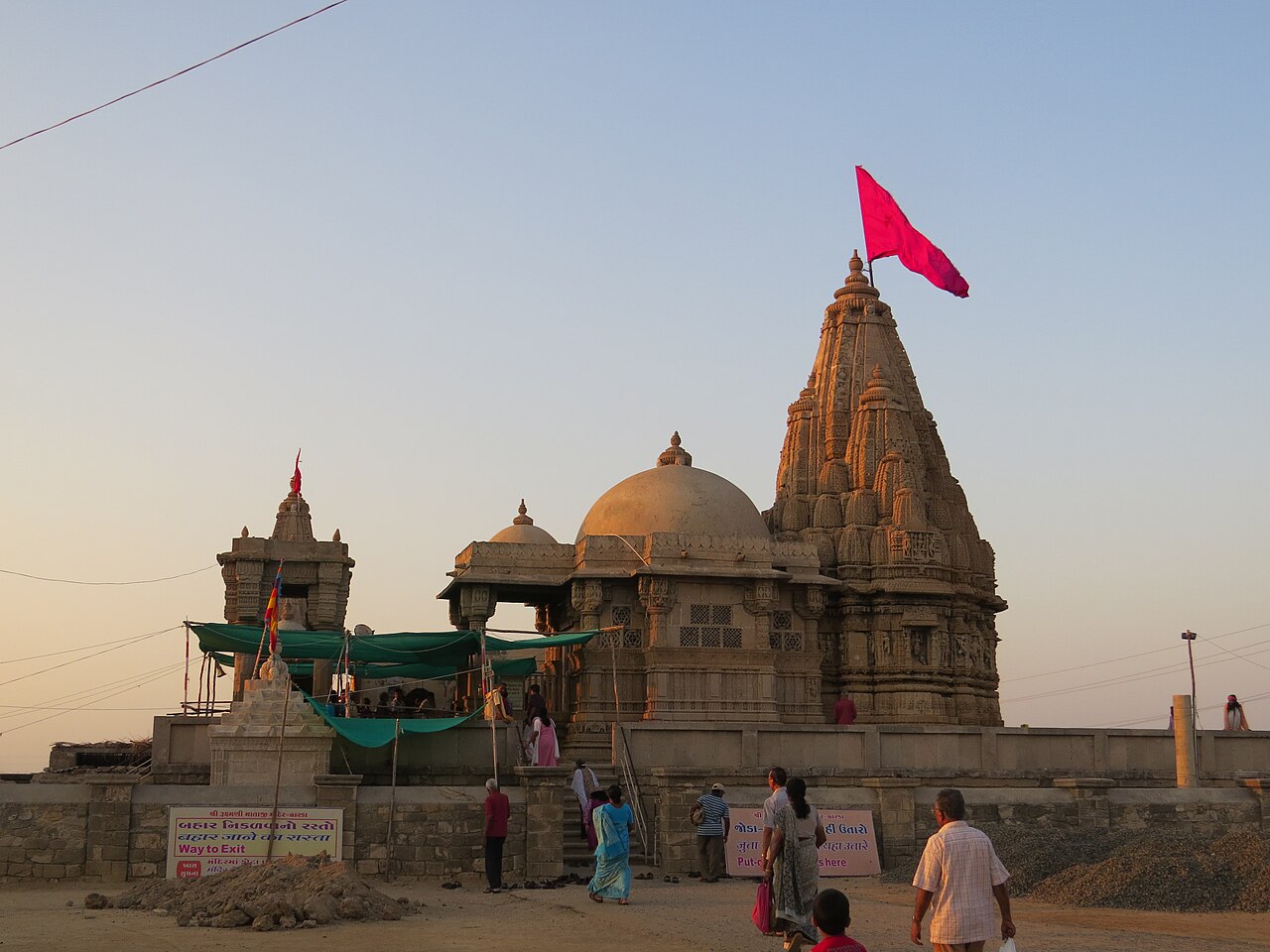
The temple dates back to the 12th century CE and is a protected monument of national importance under the Archaeological Survey of India (ASI). It is designed in the classical Maru-Gurjara style of the Solanki dynasty, consisting of an inner sanctum (*Garbhagriha*) crowned by a carved curvilinear shikhara, connected to an ornate assembly pavilion (*Mandapa*).
Gajathara & Narathara Friezes
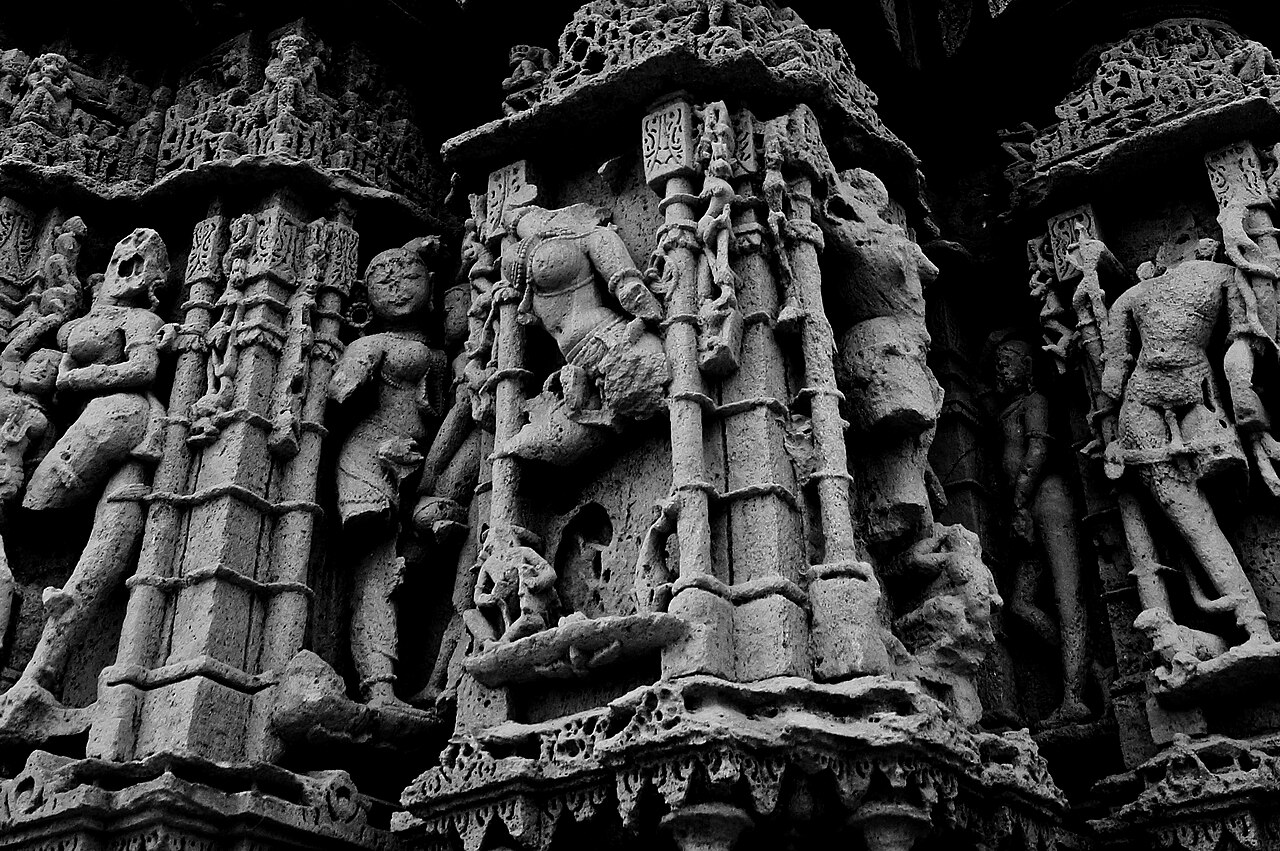
The lower plinth features horizontal bands of carved stone: Gajathara depicting processions of war elephants, and Narathara portraying everyday human life, dancers, musicians, and floral creepers.
Vishnu & Ashta Dikpala Niches
The exterior wall niches (*rathikas*) showcase sculpted forms of Vishnu, celestial dancers (Surasundaris), and directional deities (Dikpalas), preserved with astonishing clarity despite coastal weathering.
The Significance of Jal Daan (Water Donation)
Because the temple's foundational legend centers upon extreme thirst and saline land, donating sweet drinking water—known as Jal Daan—at Rukmini Devi Temple is considered the most sacred act of charity a pilgrim can perform in Dwarka.
- Water for Local Devotees: Devotees sponsor potable water tankers through the temple trust, which distributes pure drinking water to nearby hermitages and pilgrims.
- Ancestral Merit: Sponsoring Jal Daan is spiritually believed to satiate the thirst of deceased ancestors (*Pitrus*) and bring peace and domestic harmony to married couples.
Visit Rukmini Temple on Our Packages
Because Rukmini Temple is 2 km outside the city, local auto-rickshaws often charge steep rates. On our tour packages, you travel comfortably in your dedicated private AC vehicle.
- Included in 3D/2N Divine Escape (From ₹8,999)
- Included in 5D/4N Spiritual Retreat (From ₹18,999)
- Private AC vehicle waiting at entrance
- Jal Daan coordination with temple trust
- Combined with Sunset Point & Bhadkeshwar