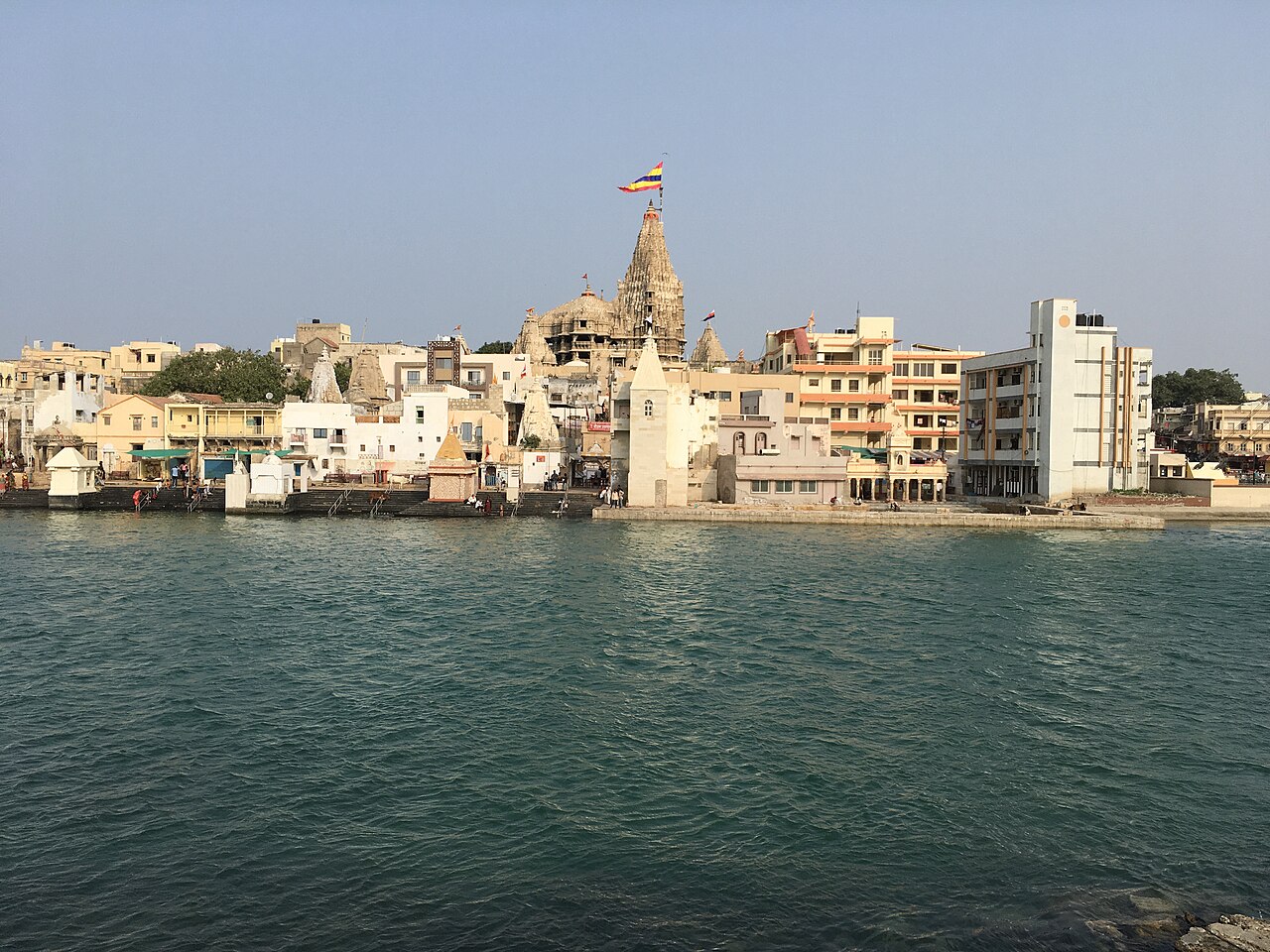
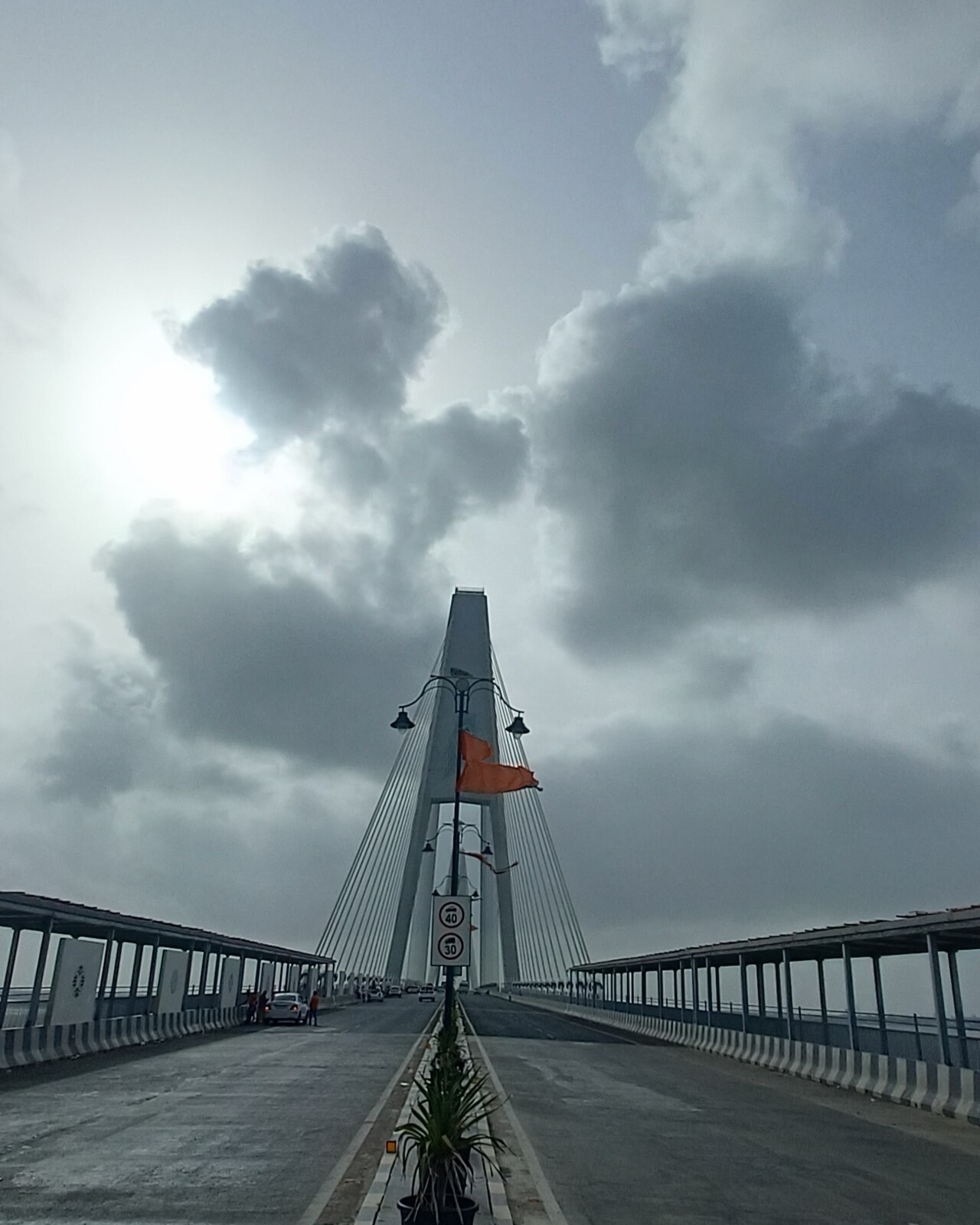
From the Mahabharata to Archaeological Verification
According to ancient Hindu epics including the Mahabharata, Harivamsa, and the Shrimad Bhagavatam, Lord Krishna reclaimed twelve yojanas (approximately 96 square kilometers) of land from the Arabian Sea with the blessing of Samudra Deva (the Sea God) to establish the fortified golden city of Dvaravati (Dwarka). The city served as the flourishing capital of the Yadava clan after Krishna migrated from Mathura to protect his citizens from repeated invasions by Jarasandha.
Traditional scripture recounts that following Lord Krishna's departure from Earth at Bhalka Tirtha, the sacred ocean reclaimed Dvaravati, submerging its palatial gates beneath the Arabian Sea. Lord Krishna’s great-grandson, Vajranabha, built the first umbrella shrine over Hari Griha (the private residential palace of Lord Krishna) in approximately 400 BCE.
Marine Archaeological Discoveries (NIO & ASI)
Between 1983 and 1990, underwater excavations conducted by renowned marine archaeologist Dr. S.R. Rao of the Marine Archaeology Unit (National Institute of Oceanography - NIO) and the Archaeological Survey of India (ASI) revealed submerged stone bastion walls, large triangular three-holed stone anchors similar to those found in Cyprus and Syria, and proto-historic pottery dating between 1500 BCE and 1400 BCE. These findings confirmed the physical existence of a submerged port-city matching classical descriptions of ancient Dvaravati.
The current magnificent temple structure was constructed during the 15th and 16th centuries in the Maru-Gurjara (Chalukyan) architectural tradition over foundations sanctified by Adi Shankaracharya (788–820 CE), who established the western Sharda Peeth here as one of Hinduism’s four cardinal monasteries.
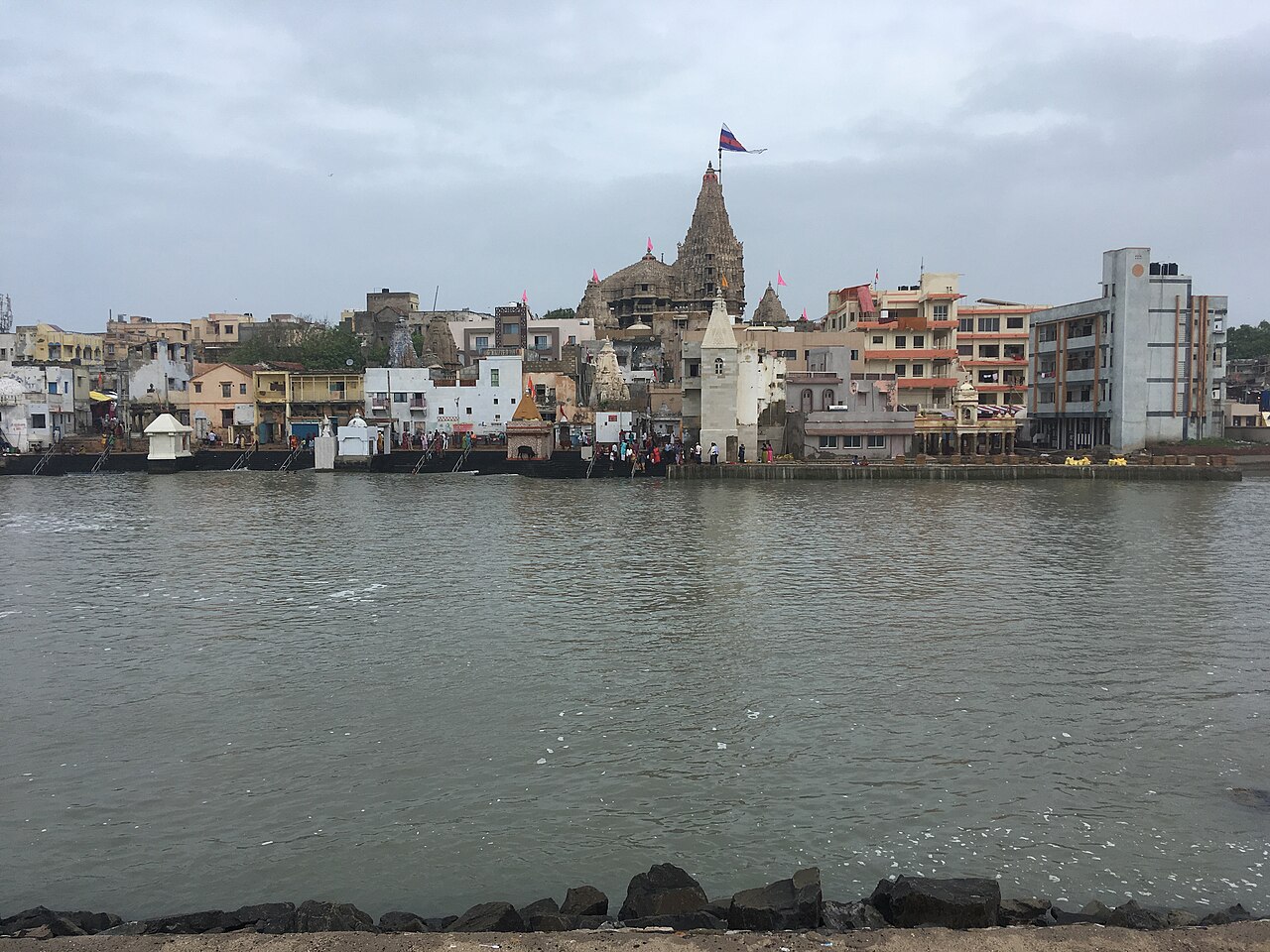
The 7-Story Spire & Two Sacred Gateways
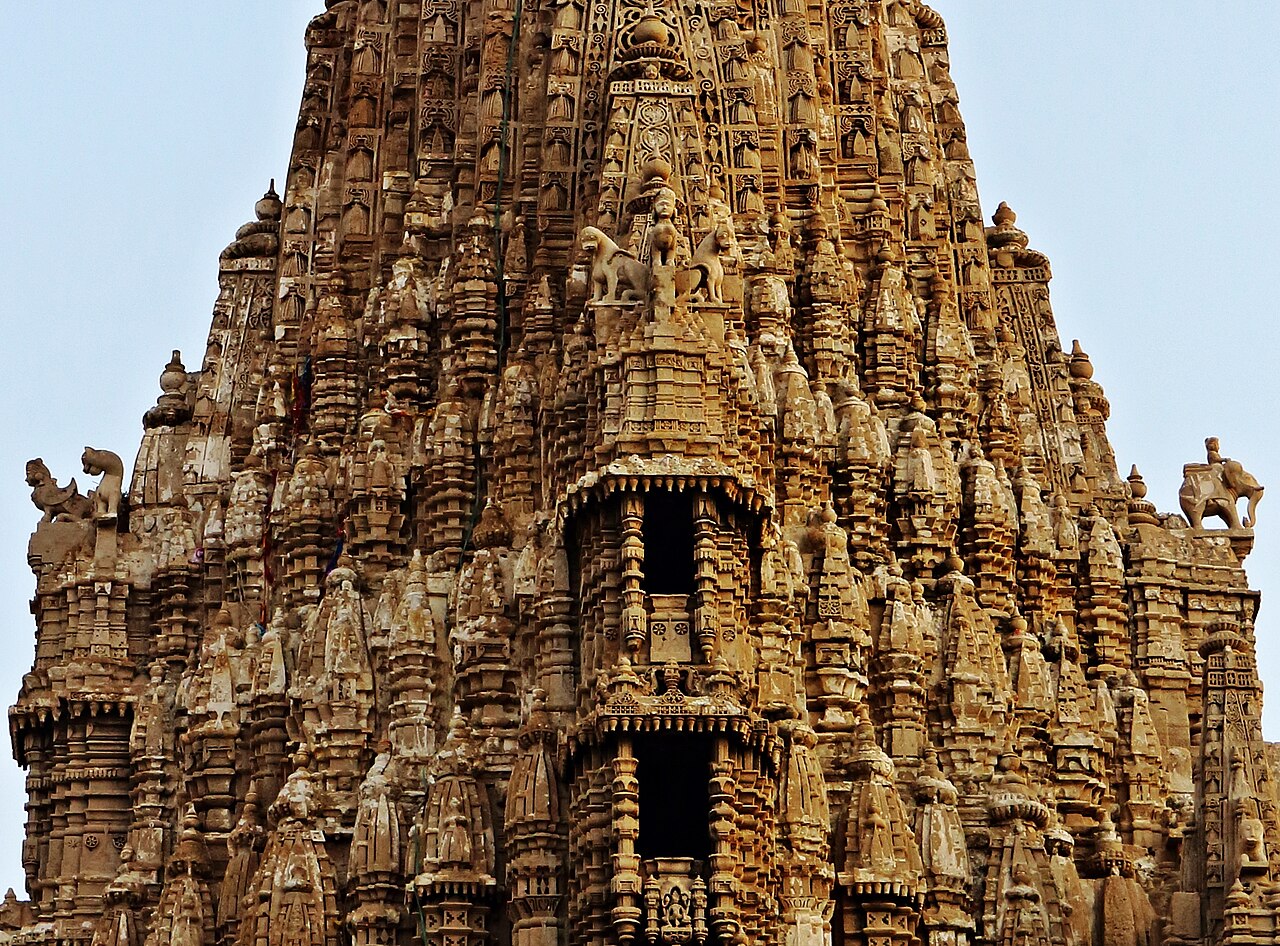
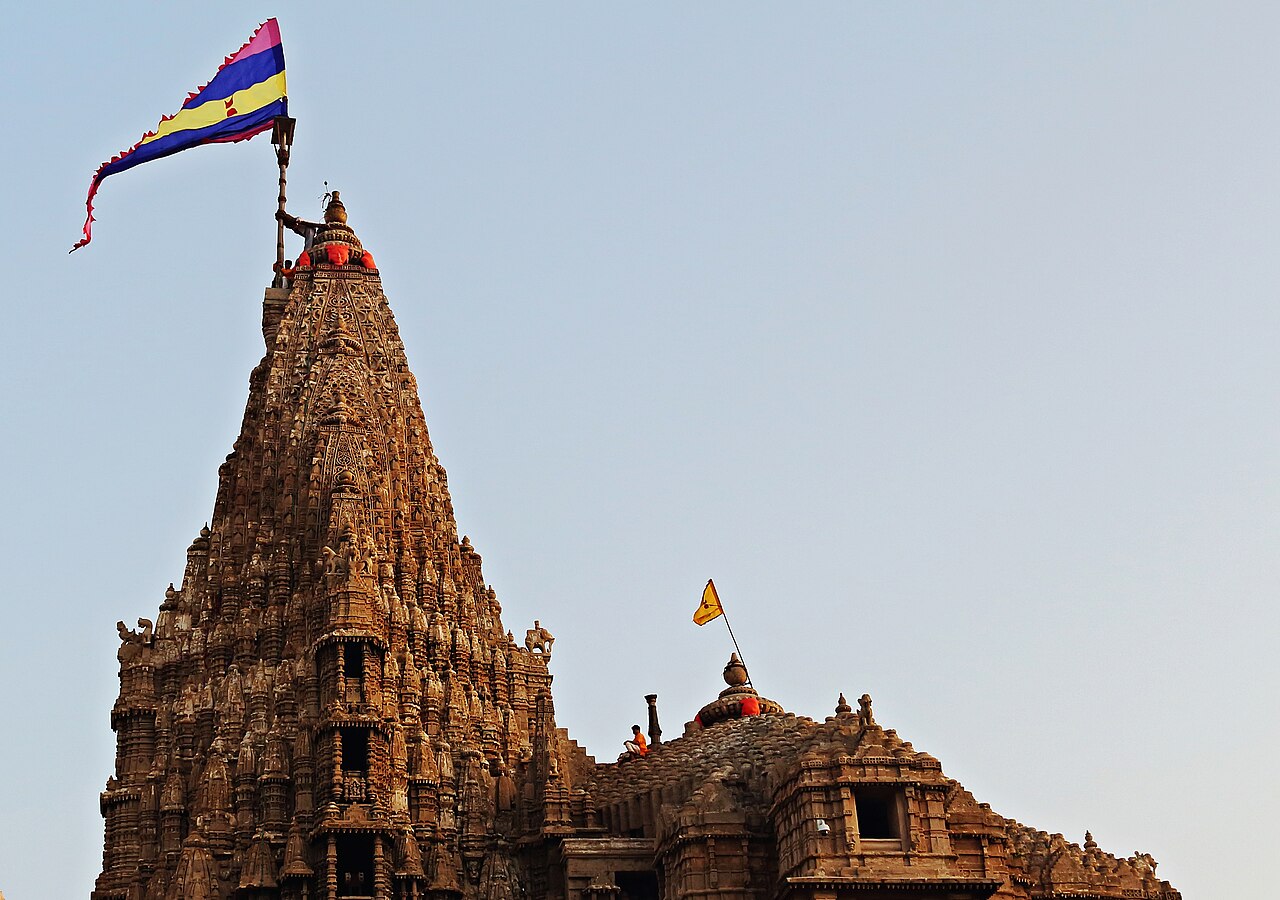
The Jagat Mandir represents the zenith of Western Indian temple craftsmanship, carved entirely from locally quarried limestone (calcareous sandstone) that has withstood maritime salt winds for centuries.
Swarga Dwar (Heaven's Gate)
The southern entrance overlooking Gomti Ghat. Pilgrims take a holy dip in the river, cleanse themselves, and climb 56 steps (representing the 56 crore Yadavas) to enter the sanctum through Swarga Dwar.
Moksha Dwar (Liberation Gate)
The northern exit gate leading toward the main town market. Passing through Moksha Dwar after receiving darshan symbolizes liberation from the endless cycle of rebirth.
The inner assembly hall (Sabhamandapa) is supported by 72 monolithically carved pillars, each displaying panels of dancing celestial nymphs (Apsaras), musicians, and depictions of Vishnu's Dashavatara. The inner sanctum (Garbhagriha) houses the resplendent black stone deity of Lord Krishna as Trivikrama, adorned with royal gold ornaments and precious stones.
The Sacred 52-Gaj Dhwajarohan (Flag Changing Ritual)
One of the most extraordinary sights in Dwarka is the monumental triangular flag flying atop the 78-meter high spire. The flag is 52 yards (approx. 47.5 meters) in length and features vibrant colored bands with bold emblems of the Sun and the Moon, proclaiming that Lord Krishna’s sovereignty shall endure as long as the sun and moon shine in the cosmos.
- Why 52 Yards? The number 52 symbolizes the 52 administrative gates and royal chiefs of ancient Dwarka, 12 suns (Adityas), 27 lunar mansions (Nakshatras), 8 directions (Ashta Dikpala), and the primordial Trimurti.
- 5 Times Daily: The flag is changed five times every day (3 times in the morning session and 2 times in the evening) by daring members of the hereditary Abooti Brahmin community, who scale the steep outer shikhara without ropes or harnesses.
- Multi-Year Devotee Waitlist: Devotees sponsor the Dhwaja as an act of profound devotion. Sponsorship bookings through the official Devasthan Trust often have waitlists running several years in advance.
Official Aarti & Darshan Timings
Governed strictly by the Shree Dwarkadhish Devasthan Samiti. Timings may slightly adjust during major festival days such as Janmashtami and Annakoot.
Dress Code & Security Protocols
Strict Dress Code
- Men: Dhoti-kurta, kurta-pajama, or full-length trousers with modest shirts.
- Women: Sarees, salwar kameez, or traditional ethnic suits.
- Strictly Banned: Shorts, miniskirts, capris, and sleeveless tops are not allowed inside the sanctum.
Electronic Gadget Ban
- Mobile phones, smartwatches, cameras, electronic car keys, and leather belts are prohibited.
- Use official token-based lockers outside Swarga Dwar or Moksha Dwar before joining the queue.
- On our tours, your dedicated driver keeps electronic belongings secure in your private AC cab.
Visit Dwarkadhish Mandir with Our Team
Avoid navigation confusion, long taxi waits, and parking hassles. Our tour packages include dedicated AC vehicles, verified hotel stays, and experienced local guide assistance for seamless darshan.
- Included in 3D/2N Divine Escape (From ₹8,999)
- Included in 5D/4N Spiritual Retreat (From ₹18,999)
- Locker assistance & queue navigation
- Senior citizen wheelchair coordination
- Guaranteed free Dwarka station pickup